 blog
Best Organic Soaps for Sensitive Skin, Compared
Last Updated: November 7, 2026
Quick Summary
The best organic soaps for sensitive skin are fragrance-free, dye-free bars with short ingredient lists and a plant-oil base such as olive oil or shea butter. Dermatology guidance points to gentle cleansers rather than heavily perfumed bars, and fragrance-free always beats unscented, which may hide a masking scent.
- Patch test a new bar over two weeks, starting on the inner forearm before daily use.
- Traditional soap bars sit around pH 9 to 10 while healthy skin is closer to pH 4.5 to 5.5.
- Fragrance-free means no added scent, while unscented may contain a masking fragrance.
- Colloidal oatmeal is finely milled oat that forms a milky film and is used in eczema care.
- Compare bars by price per ounce, since sticker prices mislead across different bar weights.
Table of Contents
- What Makes a Soap Truly Safe for Sensitive Skin
- Best Soap for Sensitive Skin Dermatologist Recommended: What the Guidance Actually Says
- Best Soap for Sensitive Skin Eczema: Matching the Bar to the Flare
- Fragrance-Free Soap for Sensitive Skin: Why Unscented Is Not the Same Thing
- Hypoallergenic Bar Soap for Sensitive Skin: Reading the Label Without the Hype
- Ingredients to Avoid and the Short List Worth Trusting
- Building a Small-Batch Soap Ritual That Fits Your Skin
- Frequently Asked Questions
What Makes a Soap Truly Safe for Sensitive Skin
The best organic soaps for sensitive skin share one trait: they clean without stripping the skin barrier. That sounds simple, but most bars on the shelf fail at it.
Sensitive skin is skin that reacts faster and more visibly to irritants, allergens, or barrier damage than most skin does. It is not a diagnosis. It is a pattern, and the pattern has causes. The American Academy of Dermatology's guidance on sensitive skin care puts it plainly: fragrance, harsh cleansers, and long, hot washes top the list of everyday triggers. Understanding which cause applies to you changes which bar you should buy.
The Four Causes of Sensitivity and What Each One Needs
Not all irritation is the same, and treating every flare as "dryness" leads people to the wrong product. Here is how we sort it:
- Barrier damage. Over-washing or harsh surfactants leave skin tight, flaky, and stinging. It needs fewer washes, lukewarm water, and a soap with a short plant-oil base.
- Contact irritation. A specific ingredient, often synthetic fragrance or a dye, causes redness where the product touched. It needs removal of the offender, not a stronger moisturizer.
- Allergy. A true immune reaction, sometimes to "natural" essential oils. It needs a fragrance-free bar and, ideally, a dermatologist's patch test.
- Underlying conditions. Eczema and rosacea flare in cycles. These need a routine matched to the flare, which we cover below.
A common mistake is buying a soothing bar to fix a problem the bar cannot fix. If the trigger is still in your shower, no soap will calm the skin.
Patch Testing: A Two-Week Introduction Plan
New soap, new risk. Even a gentle bar deserves a test run, because reactions can take days to appear.
- Days 1-2: Rub a small amount on the inner forearm, rinse, and leave the area otherwise bare.
- Days 3-5: Wash one small area, such as the forearm, once daily.
- Days 6-9: Use the bar on the face or body every other day.
- Days 10-14: Move to daily use. Stop at any point if itching, redness, or stinging appears.
Watch out: testing a new bar during an active flare can make it hard to tell a reaction from the flare itself. Waiting for calm skin keeps the result clearer.
Best Soap for Sensitive Skin Dermatologist Recommended: What the Guidance Actually Says
Dermatologists rarely recommend a brand. They recommend a formula profile, and that is more useful. The American Academy of Dermatology's soap and cleanser advice steers sensitive-skin patients toward fragrance-free, dye-free cleansers with short ingredient lists and a moisturizing base.
That profile points to a gentle cleanser built on plant oils rather than a heavily perfumed bar. When you shop, read the label against these markers:
- No synthetic fragrance or "parfum" listing
- No dyes
- Fewer than roughly ten ingredients
- A plant-oil base such as olive oil or shea butter near the top
What most guides miss is that "dermatologist recommended" on packaging is marketing, not medicine. The formula matters; the badge does not.
Best Soap for Sensitive Skin Eczema: Matching the Bar to the Flare
Eczema care rewards patience over novelty. During a flare, skin is cracked and reactive, so the goal shifts from pleasant washing to protecting the skin barrier. The National Eczema Association's bathing guidance recommends short, lukewarm showers and a gentle, fragrance-free cleanser, followed by moisturizer within minutes.
During a flare, a plain, unscented bar is a cautious choice.
If a bar stings on broken skin, stop. Stinging is information.
Fragrance-Free Soap for Sensitive Skin: Why Unscented Is Not the Same Thing
Fragrance-free and unscented are not interchangeable, and this single distinction causes more reactions than any other label trick. Fragrance-free means no fragrance ingredients were added, including masking scents. Unscented often means a masking fragrance was added to cover the smell of the base oils.
For reactive skin, buy fragrance-free, full stop. Essential oils, however botanical, are still fragrance, and herbal ingredients like lavender oil can irritate delicate skin.
Hypoallergenic Bar Soap for Sensitive Skin: Reading the Label Without the Hype
Treat the word as a claim to verify, not a guarantee. The label is where the truth sits, but only if you read it the same way every time. Most shoppers compare bars by scent and price; a better approach is to compare them on a fixed set of criteria so the differences that matter to reactive skin become visible.
A Standardized Way to Compare Two Bars
Use the same six checks on every candidate. This turns a vague "which feels gentler" question into a side-by-side you can actually finish.
- Full ingredient list, in order. Ingredients are listed by weight down to 1 percent, then in any order. A plant-oil base such as olive oil or shea butter should appear near the top; fragrance, dyes, and short-chain surfactants should not appear at all.
- Fragrance status. Look for "fragrance," "parfum," "essential oil," or a named botanical oil. Any of these means the bar is scented, even if the front label says "natural."
- Cleanser type. Traditional soap (saponified oils) versus a syndet (synthetic detergent) bar. The two behave differently on dry or reactive skin, and the ingredient list tells you which you have: saponified oils usually appear as "sodium [oil]ate," while syndets list ingredients such as sodium cocoyl isethionate.
- Certifications. "Organic" on a bar can refer to a single oil or the whole formula. Check whether a certifier is named and what percentage of ingredients is covered.
- Bar size and price per ounce. Bars range widely in weight, so the sticker price misleads. Divide price by ounces to compare fairly.
- Packaging and availability. Plastic-free wrap, refill options, and whether the bar is stocked locally affect whether you can keep using it, which matters more than a one-time experiment.
| Label claim | What it usually means | What to check |
|---|---|---|
| Hypoallergenic | Maker's own claim | Full ingredient list |
| Fragrance-free | No added scent | No "parfum" or essential oils |
| Unscented | May contain masking scent | Ask the maker directly |
| Organic | Ingredient growing standard | Which oils are certified, and by whom |
| Natural | Unregulated term | Plant-oil base, short list |
| Dermatologist recommended | Paid or unpaid endorsement | The formula, not the badge |
Soap Chemistry: Why pH and Cleanser Type Matter
A traditional soap bar is made by saponifying fats with lye, and the result is alkaline, typically around pH 9 to 10. Healthy skin sits closer to pH 4.5 to 5.5. For many people that gap is harmless, but on barrier-damaged or eczema-prone skin, an alkaline cleanser can raise skin pH temporarily and leave it feeling tight. Syndet bars are formulated closer to skin pH and can be gentler for some reactive skin, though they are not automatically better; a poorly made syndet can still strip.
Watch out: a bar that leaves skin squeaky-clean is usually over-cleansing. Squeak is friction, not cleanliness.
What the Word "Organic" Actually Covers
The word "organic" on a soap can refer to a single ingredient or to a private standard, so it is worth checking what the label covers. Ask which oils are certified and by which certifier, and treat an unnamed claim as marketing until the maker answers. If you want the longer version, our guide to what organic actually means breaks down the standards behind the claim.
Ingredients to Avoid and the Short List Worth Trusting
Start with what to leave on the shelf. Synthetic fragrance, dyes, and harsh surfactants are the usual suspects, and a short ingredient list makes them easy to spot. But "avoid" lists are easy to write and hard to trust, because they often mix strong evidence with folklore. Here is how to separate the two.
Ingredients With Real Evidence Behind Them
A few ingredients have enough clinical and dermatology backing that they show up repeatedly in guidance for reactive skin:
- Colloidal oatmeal. Finely milled oat that forms a milky film on the skin. It is recognized in dermatology as a soothing agent and appears in many eczema-care routines. It is one of the few "soothing" ingredients with a long history of use rather than a marketing story.
- Petrolatum and similar occlusives. Not glamorous, but among the most reliable barrier protectors. A plain occlusive after washing is often more effective than an exotic botanical in the bar.
- Glycerin. A humectant that draws water into the skin. It is a common byproduct of saponification and a reason a well-made bar can feel less tight than a stripped commercial one.
- Niacinamide. Found in some cleansers and leave-on products; it has a reasonable evidence base for barrier support, though in a rinse-off bar its contact time is short.
Ingredients to Treat With Caution
- Synthetic fragrance and "parfum." The most common cause of contact irritation in cosmetics. Fragrance mixes are also among the most frequent positive patch-test results in dermatology clinics.
- Essential oils. However botanical, they are still fragrance and can irritate delicate skin. Lavender oil, citrus oils, and peppermint are common offenders.
- Dyes. Added for color only; no cleansing benefit and a known irritation risk.
- Harsh surfactants. Ingredients such as sodium lauryl sulfate can strip the skin barrier, especially in a high concentration or a long, hot wash.
- "Chemical-free" and similar slogans. Meaningless, since water is a chemical. Judge the list, not the slogan.
How to Tell Evidence From Marketing
A claim is stronger when it names an ingredient, a mechanism, and a source you can check. "Contains soothing botanicals" is marketing. "Contains colloidal oatmeal, which dermatology guidance lists for eczema-prone skin" is a claim you can verify.
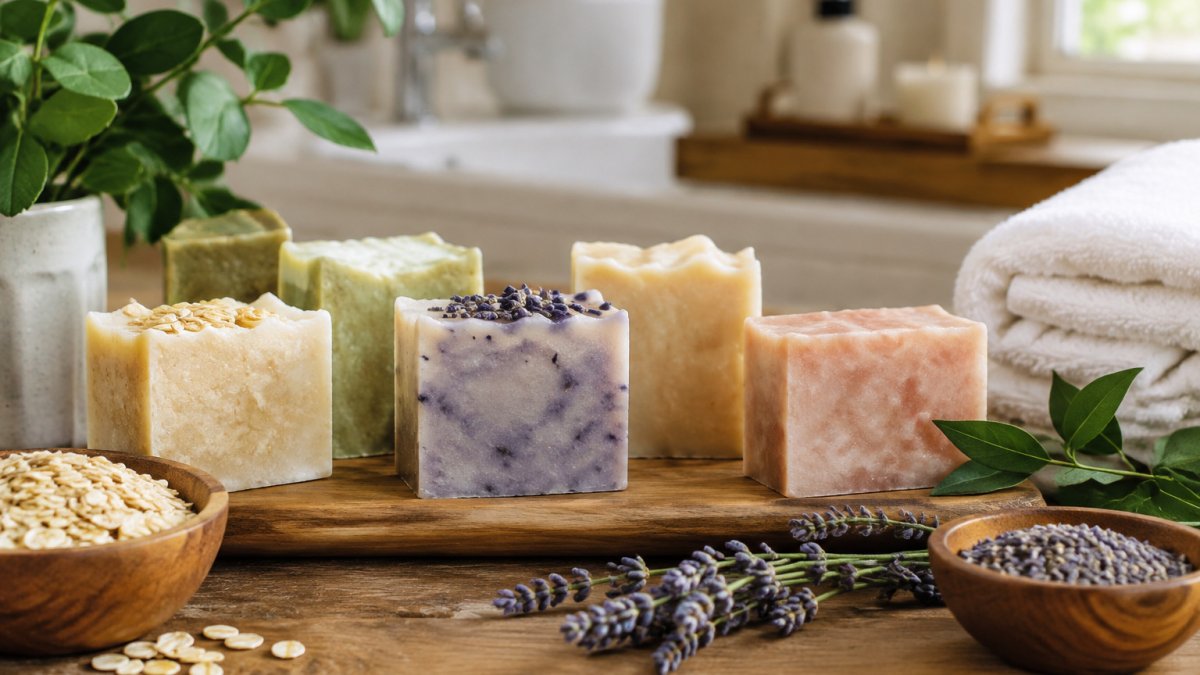
Ingredients worth trusting include a plant-oil base such as olive oil, shea butter, and goat milk for moisture; oatmeal and calendula to soothe; and certified organic oils when you want transparency. If you want to see how a short, plant-based list looks in practice, you can browse our organic soap range and read each bar's ingredients side by side.
Building a Small-Batch Soap Ritual That Fits Your Skin
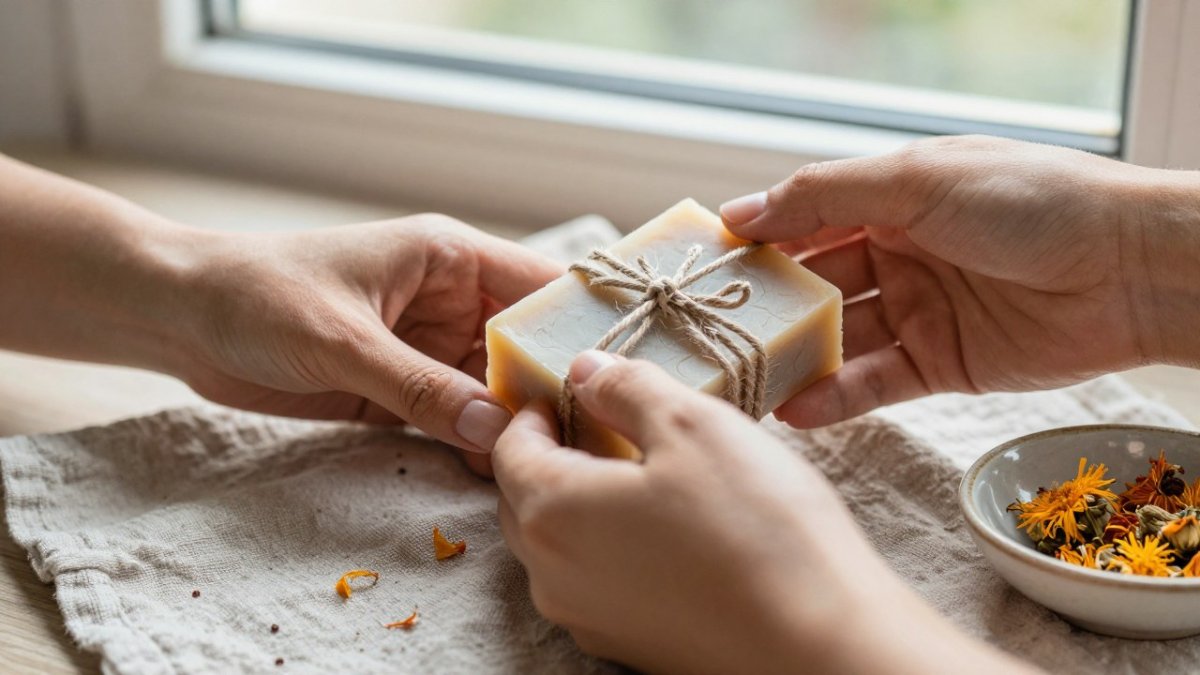
A good routine beats a good product. Ours is simple: lukewarm water, one gentle pass with the bar, a quick rinse, and a moisturizer within a few minutes while skin is still damp.
For more on matching ingredients to skin types, our journal covers soap and skin topics in depth.
Sensitive skin asks for fewer, better things: a short ingredient list, no fragrance, and a bar that cleans without stripping.
Frequently Asked Questions
What is the healthiest soap to use on your skin?
The healthiest choice for most people is a short-ingredient bar built on a plant-oil base such as olive oil or shea butter, with no synthetic fragrance or dyes. Dermatologists generally favor gentle cleansers that respect the skin barrier rather than stripping it. Look for fragrance-free or unscented labels, a pH closer to skin's natural range, and soothing additions like oatmeal or calendula. Lather lightly, rinse thoroughly, and follow with a moisturizer while skin is still damp.
Which soap is best for sensitive skin with eczema?
For eczema-prone skin, the best soap for sensitive skin eczema is usually a fragrance-free, dye-free bar or a soap-free cleanser with a plant-oil base. Avoid anything with synthetic fragrance, essential oil blends, or exfoliating particles that can scratch inflamed skin. Oatmeal, calendula, and goat milk are common soothing additions. Keep showers short and lukewarm, and patch test any new bar on your inner forearm for several days before using it on flare-prone areas.
Are there any 100% natural soaps?
Truly 100% natural is a stretch, since any soap involves a chemical reaction between oils and an alkali. What you can find are small-batch organic soaps made with certified organic oils, plant butters, and minimal additives. Read the full ingredient list rather than the front label, and look for certifications you can verify. A short, transparent list of recognizable ingredients is a more reliable signal than a 'natural' claim alone.
What ingredients should you avoid in soap if you have sensitive skin?
Start by avoiding synthetic fragrance, dyes, and harsh surfactants that strip the skin barrier. Essential oil blends can also irritate reactive skin even when marketed as natural. Skip exfoliating beads or coarse botanicals on inflamed areas, and be cautious with strong antibacterial agents for daily use. A fragrance-free soap for sensitive skin with a short ingredient list, a plant-oil base, and soothing elements like oatmeal or shea butter is the safer starting point.